

 en
 English
 русский
 Español
 عربى

Quick Answer: How to Choose Industrial Conveyor Belts
The right industrial conveyor belts come from matching five factors: the material being carried, the load and belt speed, the operating temperature, the layout of the conveyor, and the cleaning or hygiene rules of the site. Rubber fabric belts suit abrasive bulk material, PVC and PU belts suit light to medium unit loads and food or packing lines, modular plastic belts suit washdown and curved layouts, and steel cord belts suit long, high-tension runs.
If you only remember one rule, remember this: choose the belt for the worst condition it will see, not the average day. A belt that handles the daily load but fails during a hot afternoon, a wet shift or a heavy lump drop will cost far more in downtime than the price gap between a basic belt and a correctly specified one.
The sections below explain each belt family, show comparison tables, list the key specifications to confirm before ordering, and cover installation, upkeep and cost. A full FAQ closes the guide.
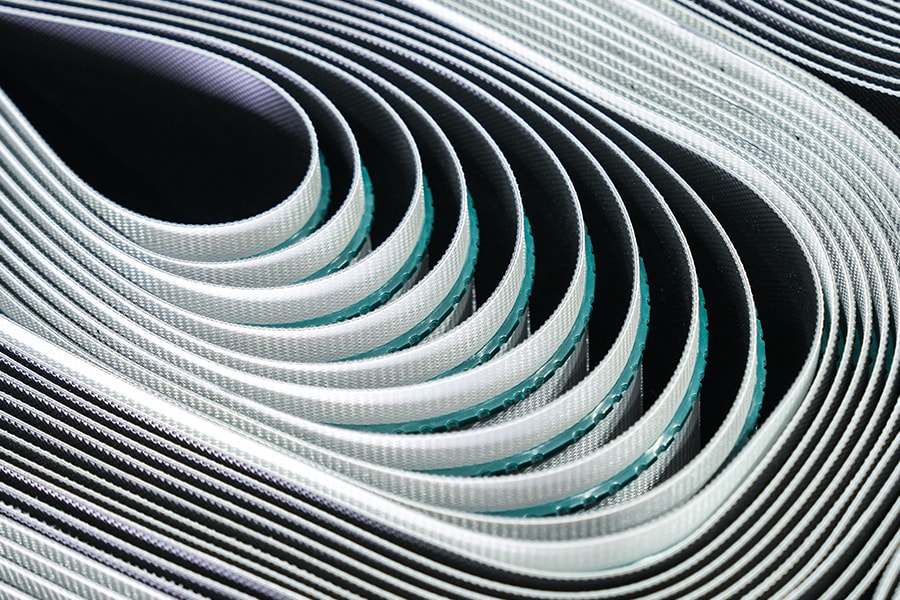
Rubber, PVC, PU and specialty belts made to your width, length and splice requirements.
View industrial conveyor belts at Belt Factory
Main Types of Industrial Conveyor Belts and Where Each Fits
The term covers a wide family. Some belts are flat and continuous, some are built from hinged modules, and some are woven from metal. Each family solves a different problem, so the first step is to know which family your application belongs to.
| Belt Family | Typical Construction | Best For |
|---|---|---|
| Rubber fabric belt | EP or NN plies with rubber covers | Mining, quarries, cement, ports, bulk handling |
| Steel cord belt | Steel cables embedded in rubber | Long distance, high tension, high capacity lines |
| PVC belt | Polyester fabric with PVC coating | Packaging, logistics, light manufacturing, airports |
| PU belt | Polyester fabric with polyurethane coating | Food, meat, bakery, cut resistant and oily products |
| Modular plastic belt | Interlocking hinged plastic modules | Washdown lines, curves, accumulation, beverage |
| Wire mesh belt | Woven or spiral metal wire | Ovens, freezers, cooling, drying, draining |
Rubber Conveyor Belts for Abrasive and Heavy Bulk Material
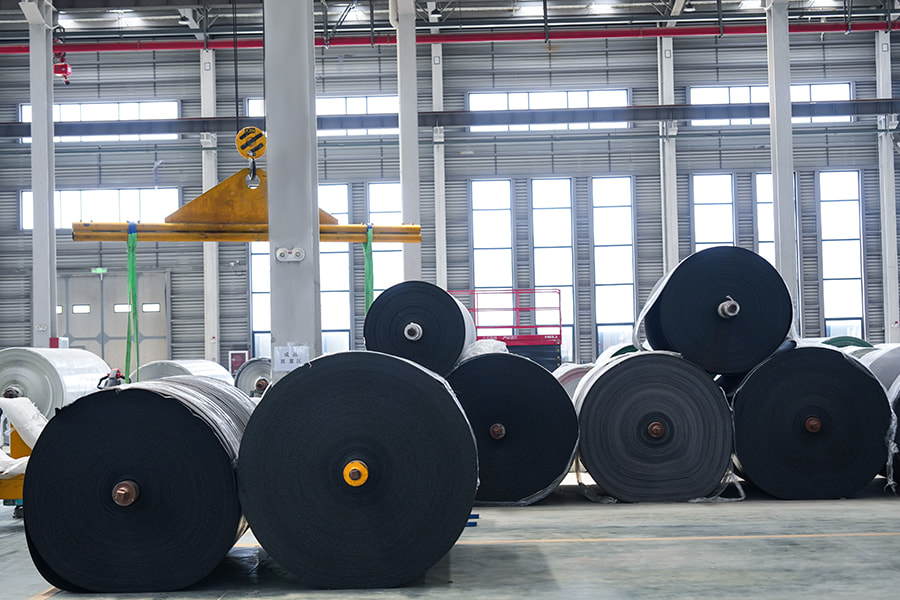
Rubber belts remain the standard choice for quarries, mines, cement plants, steel yards, grain terminals and power stations. The body is made of fabric plies, most often polyester warp with nylon weft, known as EP, or nylon in both directions, known as NN. The plies carry the tension, while the top and bottom rubber covers protect them from impact, cutting and wear.
Cover Grades Explained
Cover grade describes how the rubber compound resists abrasion. Grades such as DIN Y, DIN W and DIN X are commonly used in the market, where lower abrasion loss values mean better wear life. Heavy sharp rock such as crushed granite calls for a tougher top cover, while rounded sand or grain can run on a lighter grade. Cover thickness is usually matched to the lump size and drop height at the loading point.
Typical Strengths and Limits
- Strong resistance to impact and tearing at transfer points.
- Available in general purpose, heat resistant, oil resistant and flame retardant compounds.
- Plied belts can be trough shaped on idlers to carry more volume.
- General purpose rubber is usually rated for roughly 80 to 100 degrees Celsius of material temperature, while heat resistant grades are built for far higher figures.
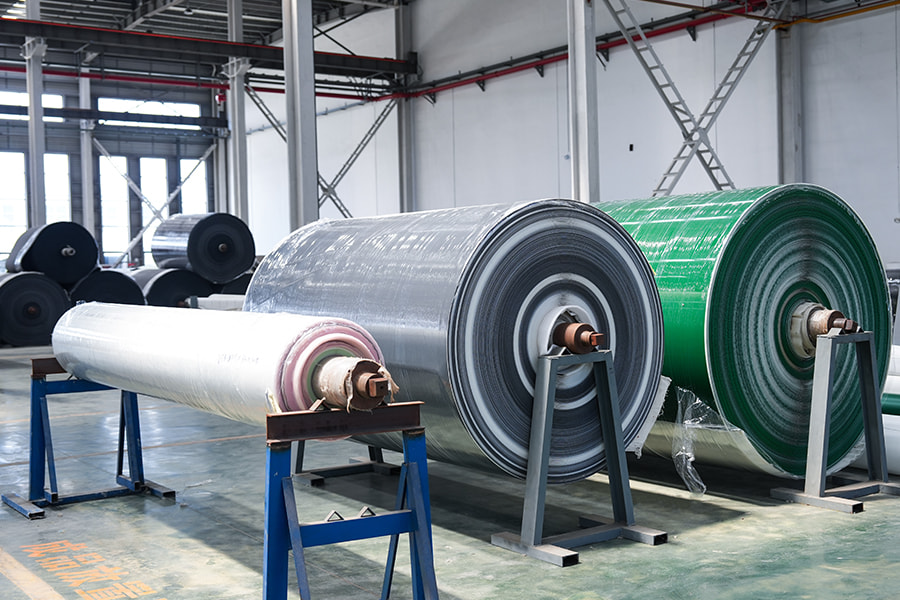
EP fabric belts with abrasion resistant covers for bulk handling lines.
Explore rubber conveyor belts
Steel Cord Belts for Long Distance and High Tension Lines
When a conveyor runs for kilometers or lifts material over a big height difference, fabric plies cannot carry the tension. Steel cord belts embed parallel steel cables in rubber, which gives very high tensile strength with low stretch. A single flight can span very long distances, which cuts the number of transfer towers and the spare parts that go with them.
The trade-off is cost and handling. These belts are heavier, need specialist splicing, and require X-ray or magnetic monitoring on critical lines to detect cord damage early. For short or moderate lines, a fabric belt is normally the more economical answer.
Rule of thumb: consider steel cord once the required belt strength passes what multi ply EP can deliver at an acceptable belt thickness, or when low elongation is needed to keep take-up travel short.
PVC and PU Conveyor Belts for Light Duty, Food and Packing Lines
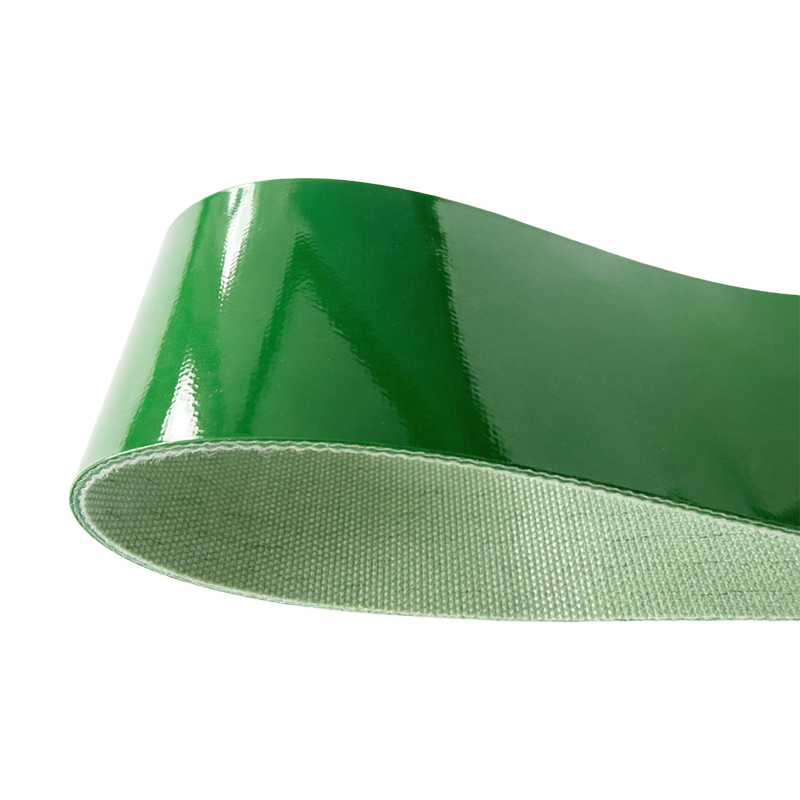
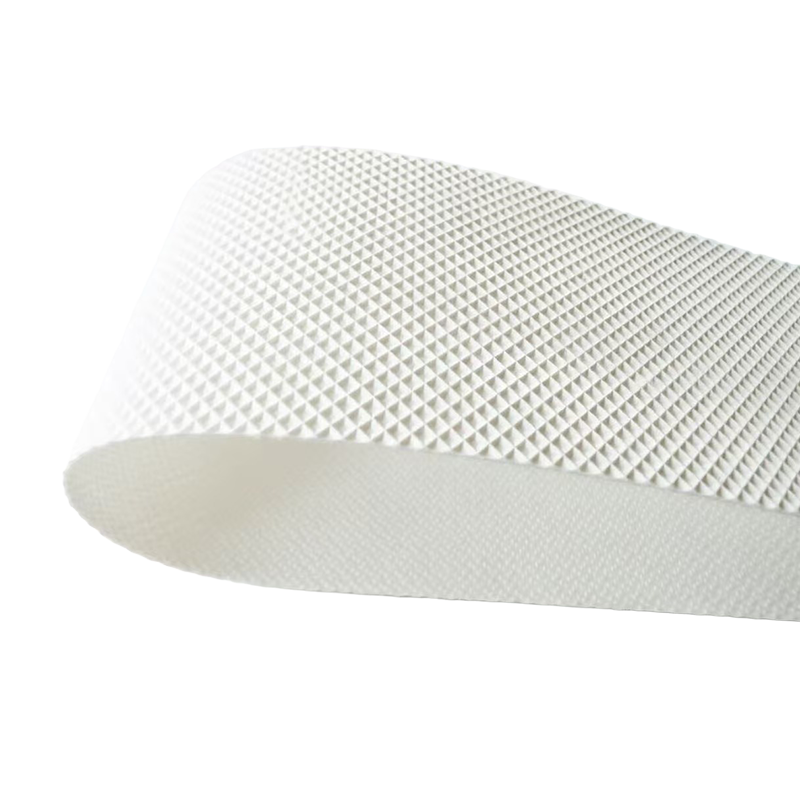
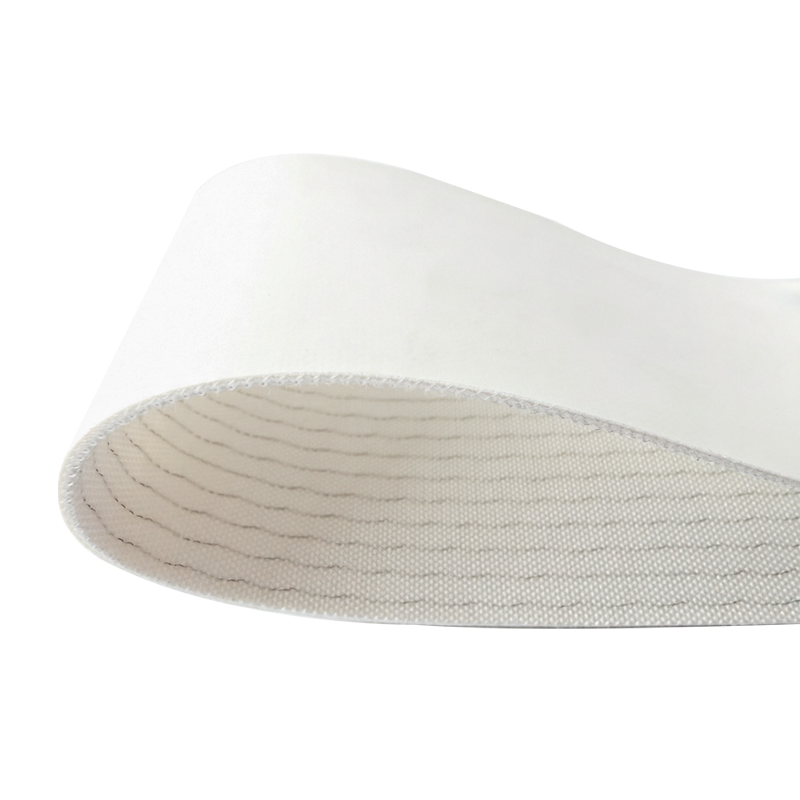
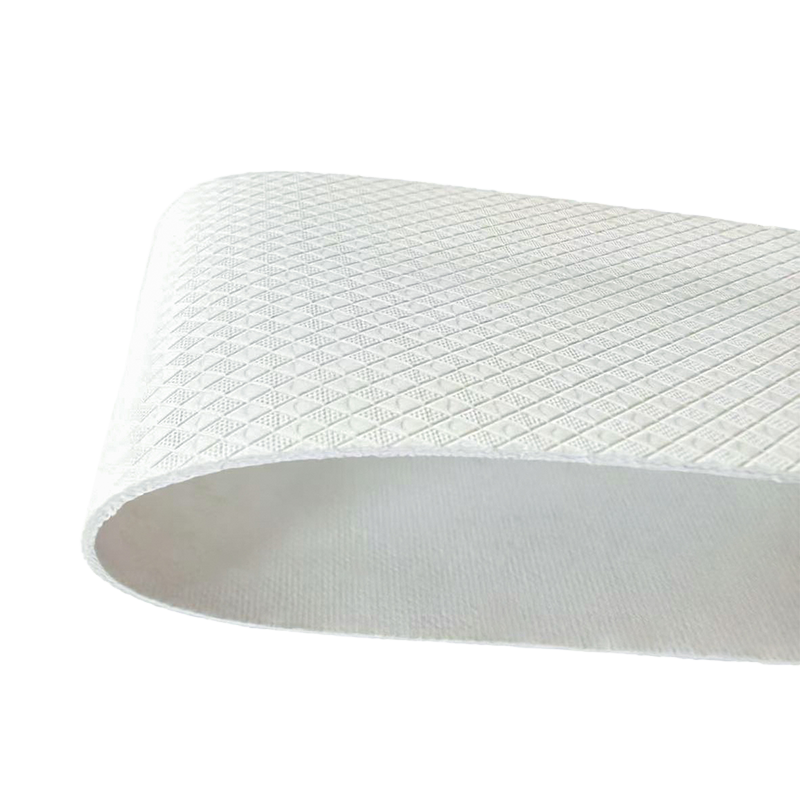
Lightweight fabric belts coated with PVC or polyurethane are the workhorses of logistics hubs, parcel sorting, electronics assembly, textile mills and food factories. They run on small pulleys, stay flat, and can be fitted with many top surfaces such as smooth, rough top, diamond, grip and fine pattern.
PVC or PU: Which One?
| Property | PVC Belt | PU Belt |
|---|---|---|
| Cost level | Lower | Higher |
| Oil and fat resistance | Moderate | Very good |
| Cut and wear resistance | Good | Excellent |
| Small pulley use | Good | Very good, thin belts possible |
| Low temperature flexibility | Can stiffen in cold | Stays flexible longer |
| Typical use | Packing, logistics, general assembly | Meat, poultry, bakery, cutting lines |
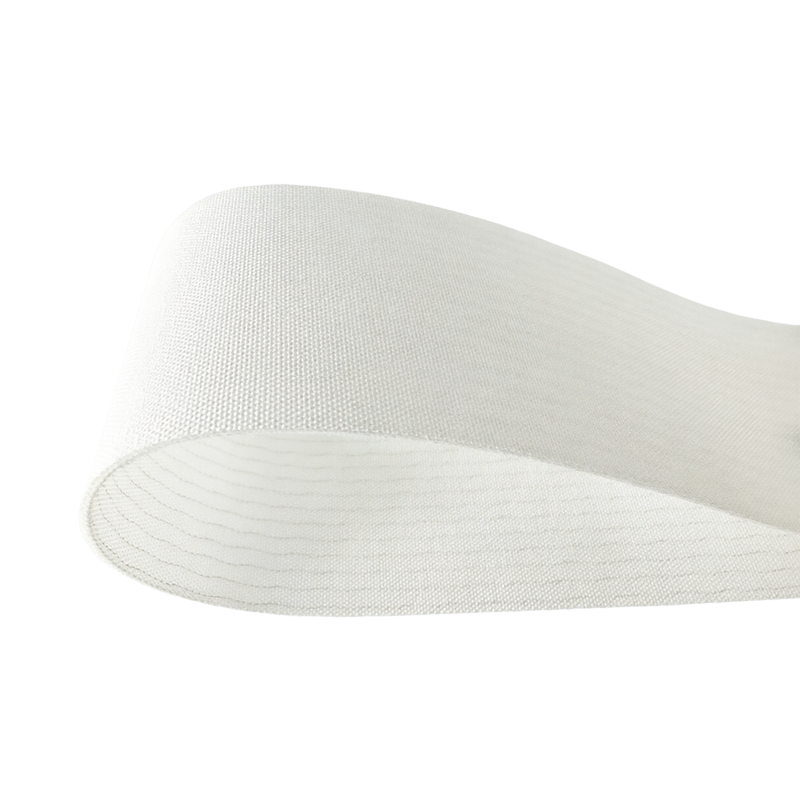
For food contact use, the belt surface should be smooth, non-porous and easy to scrub, and the edges should be sealed so that moisture cannot wick into the fabric. Many plants specify a blue or white surface so that fragments are easy to spot.
Smooth, grip and patterned surfaces for packing, food and light industry lines.
See PVC and PU belt options
Modular Plastic and Wire Mesh Belts for Washdown, Heat and Curves
Not every line suits a continuous fabric belt. Modular belts are built from plastic modules joined by hinge rods. A damaged section can be swapped without removing the whole belt, and the belt can follow curves, inclines and spirals that a flat belt cannot.
Where Modular Belts Win
- Beverage and bottling lines with frequent wet cleaning.
- Lines that need open grid surfaces for draining or air flow.
- Layouts with turns, where a radius belt replaces a chain of straight sections.
- Sites where a quick repair matters more than the lowest purchase price.
Wire Mesh Belts
Metal mesh belts are chosen when temperatures exceed what plastic or rubber can handle, such as baking, curing, drying and freezing. Open weave patterns allow hot air or cold air to pass through the product. Stainless steel grades resist corrosion in damp or acidic environments.
Cleated, Chevron and Sidewall Belts for Inclined Conveying
A smooth belt carrying loose material begins to slip back once the incline passes roughly 15 to 18 degrees, depending on the material and moisture. Profiled belts extend that range.
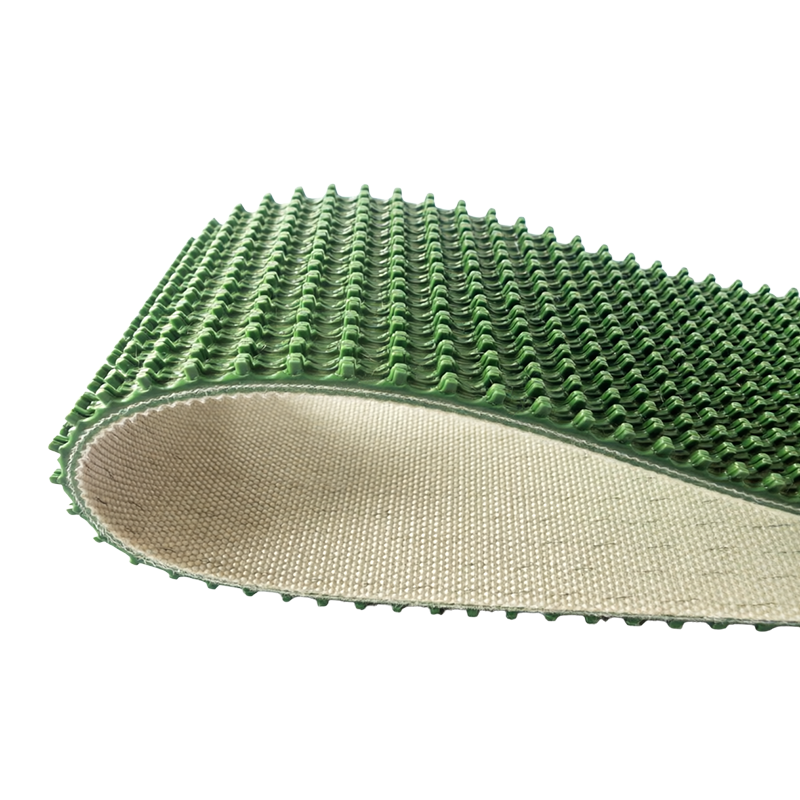
- Chevron belts carry a V shaped pattern molded into the cover. They are used for moderate inclines, commonly up to about 30 degrees with granular material.
- Cleated belts have welded or vulcanized bars across the width. They hold boxes, bags and bulk loads on steeper slopes.
- Sidewall belts combine corrugated edge walls with cross cleats to form pockets. They can lift material at very steep angles, up to vertical, in a compact footprint.
Cleat height and pitch should be chosen from the product size and the required capacity. Cleats that are too tall add weight and fatigue at the pulleys; cleats that are too low let the product roll over.
Matching Belt Material to the Operating Environment
The environment decides material choice more often than load does. Heat, oil, moisture, static charge and chemical contact each rule out some belts and favor others.
| Condition | Recommended Choice | Reason |
|---|---|---|
| Hot material, above about 100 C | Heat resistant rubber or steel mesh | Standard covers harden and crack |
| Oil, grease, animal fat | PU or oil resistant rubber | Prevents swelling and softening |
| Frequent hot water cleaning | Modular plastic or sealed PU | Easy to scrub, no fabric wicking |
| Dust or flammable atmosphere | Anti-static, flame retardant belt | Reduces spark and static build up |
| Sharp, heavy rock | Thick cover rubber, EP or steel cord | Resists impact and gouging |
| Cold storage or outdoor winter | Cold flexible rubber or PU | Avoids stiffness and edge cracking |
Step by Step Method to Select the Right Belt
A structured approach prevents most ordering mistakes. Work through the steps in order and write the answers down before contacting a supplier.
- Describe the product. Record size, weight, lump size, bulk density, moisture, temperature, sharp edges, oil or chemical content.
- Define the duty. Capacity in tons per hour or pieces per minute, belt speed, operating hours per day, start and stop frequency.
- Record the layout. Center distance, incline angle, pulley diameters, trough angle, take-up type and drive position.
- Pick the family. Use the table near the top of this guide to select rubber, steel cord, PVC, PU, modular or wire mesh.
- Confirm strength. Calculate the effective tension and select a belt rating with a safety margin, following a method such as the one in the CEMA handbook, Belt Conveyors for Bulk Materials.
- Choose covers and surface. Match cover thickness and pattern to the loading impact and the grip needed.
- Choose the joint. Decide between a vulcanized splice, mechanical fasteners or an endless finger joint.
Key Specifications to Confirm Before You Order
Suppliers can only quote accurately when the data is complete. A short, clear specification sheet saves days of back and forth.
- Width and length: measure the pulley face and the full loop length, including take-up allowance.
- Belt strength: for fabric belts, the rating in newtons per millimeter of width; for light belts, the tension at one percent elongation.
- Number of plies and total thickness: thicker belts need larger pulleys.
- Minimum pulley diameter: too small a pulley causes ply separation and early fatigue.
- Cover thickness top and bottom: state the values in millimeters.
- Edge type: cut edge, molded edge or sealed edge.
- Special properties: anti-static, flame retardant, oil resistant, heat resistant or color requirements.
| Surface | Approximate Max Incline |
|---|---|
| Smooth rubber or PVC | 15 to 18 degrees |
| Rough top or grip surface | 20 to 25 degrees |
| Chevron pattern | Up to about 30 degrees |
| Cleated belt | 35 to 60 degrees |
| Sidewall with cleats | Up to 90 degrees |
Industrial Conveyor Belt Applications by Sector
Each sector has a pattern of problems that the belt must solve. Knowing the pattern helps you ask a supplier the right questions.
Mining, Quarrying and Aggregates
Heavy impact at the feed point, sharp rock and long belts dominate. Rubber belts with thick top covers and impact beds at the loading zone are standard, with steel cord for overland lines.
Food and Beverage
Hygiene and cleaning speed drive the decision. PU belts handle meat, cheese and bakery; modular belts handle bottles, cans and wet packaging areas.
Logistics, Parcel and Airports
High duty cycles and constant start and stop movement call for belts with stable tracking, low noise and a surface that grips cartons and polybags.
Recycling and Waste Handling
Glass, metal and mixed waste cut covers quickly. Cut resistant rubber and cleated profiles are common, along with tough edge protection.
Cement, Steel and Power
Hot clinker, ash and coke need heat resistant covers, and flame retardant anti-static grades are common around dust and fuel handling.
Installation, Splicing and Tracking Basics
A good belt can still fail early if it is installed poorly. Most early failures trace back to a bad splice, an out of square frame or a wrong tension setting.
Splice Options
- Hot vulcanized splice: the strongest joint for rubber belts, made by stepping the plies and curing under heat and pressure.
- Cold bonded splice: practical for field repair where no press is available.
- Mechanical fasteners: quick to fit and good for temporary or emergency repair, with lower strength and more wear on pulleys and cleaners.
- Finger splice: common for PVC and PU belts, giving a smooth, nearly flat joint for light lines.
Tracking and Tension
Square the frame, level the rollers and check that the pulleys are parallel before the first run. Apply only the tension needed to prevent slip, since extra tension shortens belt and bearing life. Always adjust tracking at the tail and take-up pulleys in small steps, and let the belt run for several full turns after each change.
Maintenance Habits That Extend Belt Life
Routine care costs little compared with unplanned shutdowns. A simple schedule with daily, weekly and monthly checks catches most problems while they are still small.
| Symptom | Likely Cause | Action |
|---|---|---|
| Belt drifts to one side | Misaligned pulleys, uneven load, buildup on rollers | Square the frame, clean rollers, center the load |
| Belt slips on drive pulley | Low tension, wet or worn lagging | Adjust take-up, replace lagging |
| Edge fraying | Rubbing on frame or guides | Correct tracking, reset guides |
| Top cover gouging | Heavy impact, sharp lumps at loading | Add impact bars, adjust chute, upgrade cover |
| Cracks across the surface | Pulleys too small, heat, age | Check minimum pulley size, review compound |
| Carryback on return side | Worn or poorly set belt cleaner | Reset or replace cleaner blades |
Simple Inspection Routine
- Daily: walk the line, listen for noise, look at tracking and spillage.
- Weekly: check splices, cleaners, skirts and idler rotation.
- Monthly: measure cover wear at several points and record the readings to forecast replacement.
What Affects the Price of Industrial Conveyor Belts
The purchase price is only part of the cost. A belt that costs more but lasts twice as long, or avoids a single stoppage, is often the cheaper option over its life.
- Size: width, length and thickness set the amount of raw material.
- Construction: more plies or steel cords raise strength and price.
- Compound and covers: heat, oil and flame resistant compounds cost more than general purpose rubber.
- Fabrication: cleats, sidewalls, guides, perforations and endless joints add labor.
- Order volume and freight: heavy rolls cost more to ship, and container planning can lower the cost per meter.
When comparing quotes, ask each supplier to state strength rating, cover thickness, ply count and splice method in the same format. Lines that look equal on price can differ widely in these details.
Current Trends in Conveyor Belt Technology
Belt technology keeps moving toward longer life, lower energy use and easier monitoring.
- Low rolling resistance covers: special rubber compounds reduce the energy needed to flex the belt, which lowers power draw on long lines.
- Condition monitoring: sensors for temperature, speed, belt rip and splice condition help plan repair before failure.
- Recycled and lighter materials: belt makers are adding recycled fibers and thinner constructions that keep strength with less weight.
- Easier cleaning designs: sealed edges and open hinge modular belts speed up washdown in food plants.
Checklist to Send Your Supplier for a Fast Quote
Copy these items into your enquiry. A complete request usually shortens the quotation time and avoids wrong shipments.
- Material being conveyed, size, weight and temperature.
- Belt width, total length and joint type.
- Belt speed, capacity and operating hours.
- Incline angle, pulley diameters and trough angle.
- Environment: dust, water, oil, chemicals, outdoor or indoor.
- Special needs: cleats, sidewalls, guides, anti-static or flame retardant.
- Quantity and delivery location.
Send the details to the team at Belt Factory for a matched belt proposal.
FAQ About Industrial Conveyor Belts
What are industrial conveyor belts made of?
Most are built from a strength layer and a cover. The strength layer is fabric plies such as polyester and nylon, or steel cords, and the cover is rubber, PVC or polyurethane. Modular belts use plastic modules, and mesh belts use metal wire.
How long does an industrial conveyor belt last?
Life depends on load, material, speed, alignment and cleaning. Light lines with good care can run for years, while belts at an abrasive, high impact loading point may need new covers much sooner. Tracking wear readings each month gives the most reliable forecast for your own line.
What is the difference between EP and NN belts?
EP uses polyester in the lengthwise direction and nylon across, giving low stretch and good moisture resistance. NN uses nylon in both directions, which gives higher elongation and good impact absorption. EP is the more common choice for new fixed conveyors.
Which belt is best for food processing?
PU coated belts and modular plastic belts are the usual picks. Look for smooth non-porous surfaces, sealed edges and a design that can be washed quickly.
How do I measure a belt for replacement?
Measure the pulley face width, then the full path length of the loop around all pulleys with the take-up at mid travel. Read the thickness and ply data from the old belt label, and note the splice type.
Can one belt handle both hot and oily products?
Only if the compound is made for both conditions. Heat and oil resistant rubber grades exist, but they must be specified together at the order stage, since a belt tuned for one condition often fails in the other.
When should I choose a mechanical splice over a vulcanized one?
Mechanical splices fit short stoppage windows, lighter belts and field repairs. Vulcanized splices are preferred on heavy, long or high tension lines because they keep more of the belt strength and run smoothly over pulleys and cleaners.
Why does my belt keep running off to one side?
The most common reasons are an out of square frame, uneven loading, material buildup on rollers and a crooked splice. Check these in that order before changing tension.
Can Belt Factory supply custom size belts?
Yes. Send your width, length, material, strength rating and surface requirements through the Belt Factory website and the team can suggest a matching belt.
Final Thoughts on Choosing Industrial Conveyor Belts
Good belt selection is a matter of clear data and honest assumptions about the worst case on your line. Start with the product and environment, pick the belt family, confirm strength and pulley limits, then plan splicing and upkeep from the first day. Do that, and industrial conveyor belts become one of the most predictable parts of your plant.
Ready to compare options? Visit belt-factory.com and share your line details for a belt that fits.