

 en
 English
 русский
 Español
 عربى
Flat Conveyor Belt Guide: Types, Materials and Selection Tips
Home / News / Industry News / Flat Conveyor Belt Guide: Types, Materials and Selection Tips


Home / News / Industry News / Flat Conveyor Belt Guide: Types, Materials and Selection Tips
2026-11-18
Content
A flat conveyor belt is a continuous loop of fabric-reinforced or solid material that carries products on a smooth, uninterrupted surface between two or more pulleys. It is the most common belt format for light and medium loads on packaging lines, food processing lines, parcel sorters, inspection tables and machine tool feeders. If your product is small, soft, wet, sticky, or needs to sit still while a machine works on it, a flat conveyor belt is usually the first design to evaluate.
The short answer for most buyers: choose a PVC flat conveyor belt for general dry handling, a PU flat conveyor belt for food contact, oil and fat resistance, and a rubber flat conveyor belt for heavy, abrasive or hot loads. The rest of this guide explains why, and shows how to match belt construction, surface finish, joint type and drive layout to the actual job.
A flat conveyor belt differs from other belt families in one key way: the carrying surface is a single continuous sheet. Modular plastic belts are built from interlocking pieces, and wire mesh belts are built from woven metal. According to a DirectIndustry category listing, the flat conveyor belt category alone covers 93 companies and 376 products, which shows how broad the supplier base and the range of constructions have become.
Before going into the technical detail, here are the three belt families most customers ask about first. Each card links to the matching product page, where you can request samples and a quotation.
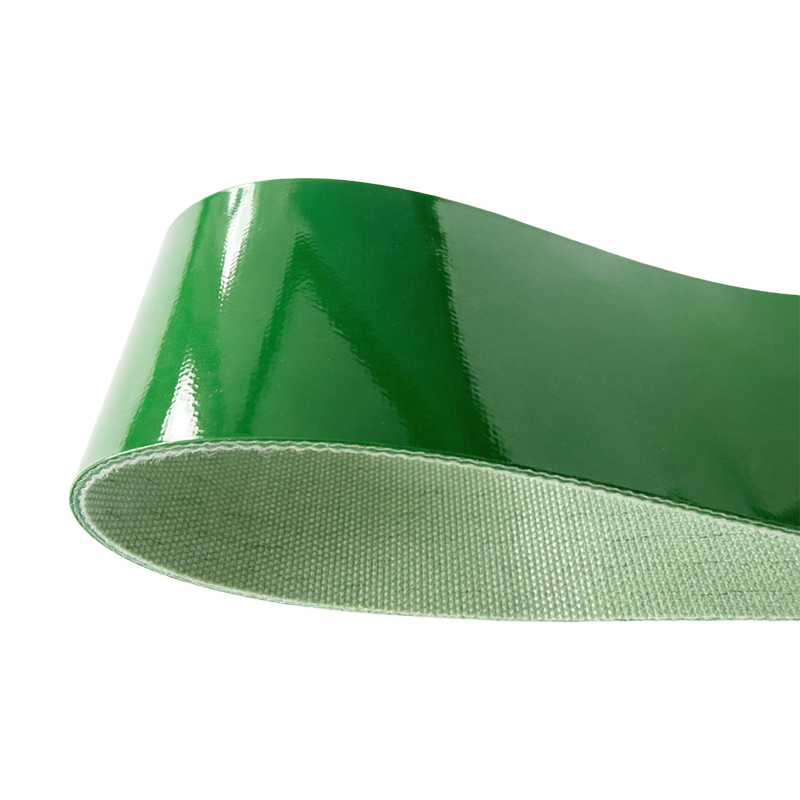 Flat Conveyor Belt Smooth, continuous belts in custom widths and lengths for general material handling.
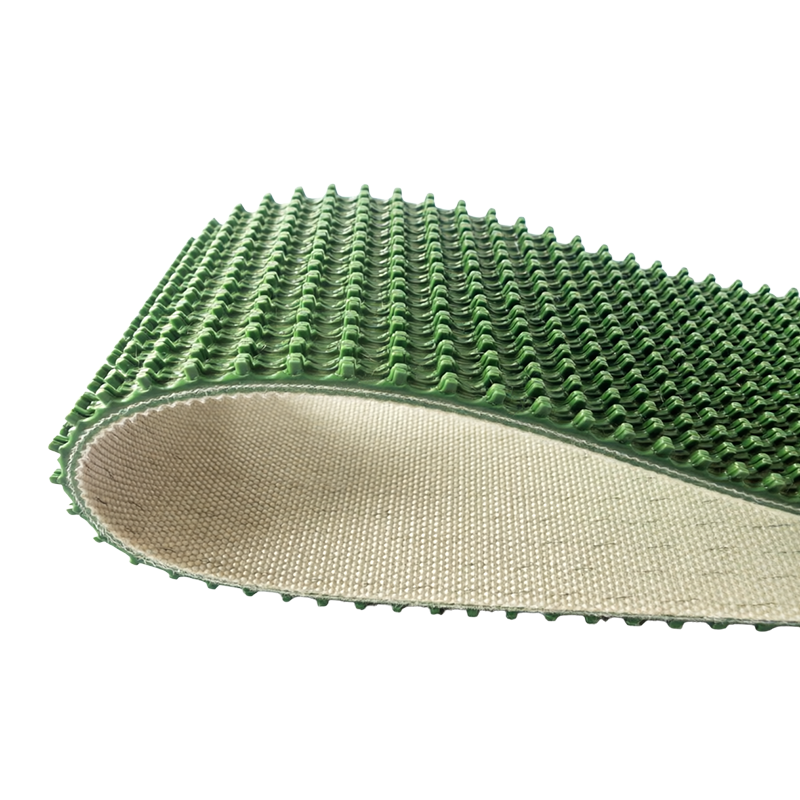 PVC Conveyor Belt An economical choice for logistics, light assembly and packaging lines.
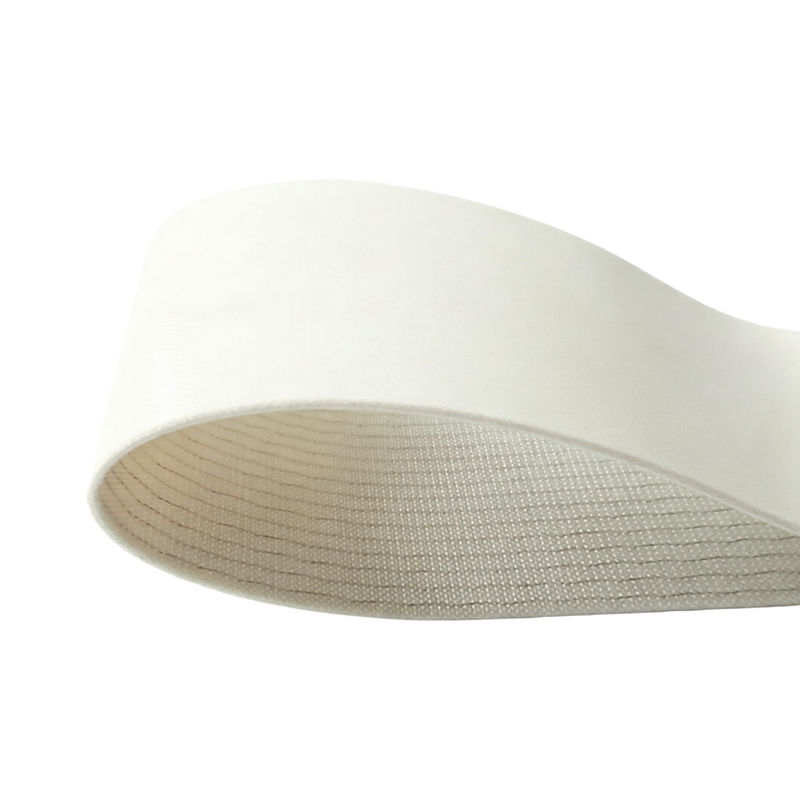 PU Conveyor Belt Oil resistant, easy to clean and suited to bakery, meat, dairy and produce handling.
The cover material decides how the belt behaves around oil, water, heat, cuts and cleaning chemicals. The table below summarizes typical working characteristics. Exact limits vary by compound and supplier, so confirm values on the datasheet for the specific belt you plan to buy.
| Material | Best For | Typical Strength | Typical Limitation |
|---|---|---|---|
| PVC | Packaging, logistics, light industry | Low cost, wide range of surfaces | Weak against animal fats and some oils |
| PU (polyurethane) | Food, pharma, fine product handling | Oil, fat and abrasion resistance, thin profile | Hydrolysis risk in hot, humid service on some grades |
| Rubber (SBR, NBR, EPDM) | Heavy, hot or abrasive materials | Impact and heat tolerance | Heavier belt, larger pulleys needed |
| TPO or PE | Wet or washdown zones | Chemical resistance, low moisture uptake | Lower grip without a textured top |
| Silicone or PTFE coated fabric | Ovens, dryers, heat sealing | High temperature and non-stick surface | Higher unit price |
Many belts also use a polyester carcass underneath the cover. Polyester resists stretch, which helps the belt keep its length and track straight. Industry suppliers that publish polyester belt ranges commonly list thicknesses from about 0.5 mm up to above 4 mm, which gives a feel for how wide the thickness choice can be for a single material family.
Most flat belts are laminated products. Each layer has a job, and changing one layer changes how the whole belt behaves on the line.
The cover touches the product. It sets friction, cleanability, chemical resistance and appearance. Surfaces range from glossy smooth to fine grain, diamond, rough top, or a sticky grip finish for inclines.
One or two plies of polyester or aramid fabric carry the pulling force. More plies raise belt strength but also raise stiffness, which means a larger minimum pulley diameter.
The back of the belt runs on pulleys and slider beds. A fabric back lowers friction on a steel bed, while a smooth back gives better drive grip on rubber lagged pulleys.
A belt is only as dependable as its joint. The three most common joining methods are listed below, from the strongest and smoothest to the quickest to install.
When a line cannot be opened up, a belt supplied already endless from the factory removes installation risk, but you need to measure the exact length with the take-up fully released. Our flat conveyor belt range can be made endless to your length or supplied open with a joint preparation.
Different industries ask different things of the same basic belt shape. Matching the construction to the sector avoids the two most common mistakes: paying for features the line never uses, and choosing a cover that fails in the first season.
| Industry | Common Belt Type | Reason |
|---|---|---|
| Bakery and confectionery | PU, thin profile, smooth top | Dough release, small knife edge transfers |
| Meat and poultry | PU or TPO, blue color | Fat resistance, easy detection of fragments |
| Parcel and e-commerce sorting | PVC, rough top or grain | Grip on cartons and poly bags, low cost |
| Electronics assembly | Anti-static PVC or PU | Static control around boards |
| Textile and garment | Felt or fabric top PVC | Gentle handling, no marking |
| Metal detection and X-ray inspection | Metal-free thin belts | No signal interference |
For food lines, a PU conveyor belt is a frequent upgrade from PVC because it handles fats better and can be made thin enough to run around small transfer edges. For dry cartons and parcels, a PVC conveyor belt remains the economical standard.
A reliable selection follows a fixed order. Working through these steps with the line drawing and a sample product in hand prevents most early failures.
If you share the product, the line speed and a drawing of the conveyor frame, we can recommend a construction and quote a belt made to your dimensions.
Three mechanical factors cause most early belt failures: pulleys that are too small, tension that is too high, and a drive pulley that cannot grip.
Every belt datasheet lists a minimum pulley diameter. Running below it cracks the cover and delaminates the plies at the bend. Thicker, multi-ply belts need larger pulleys, so a heavy belt cannot simply replace a thin one on a machine with small end rollers.
Flat belts should run with the lowest tension that still transmits drive without slipping. Excess tension shortens belt life, loads bearings and stretches the joint. A screw take-up or spring take-up keeps tension stable as the belt settles in during the first days of operation.
A rubber lagged or grooved drive pulley increases friction, which lets you reduce tension. Wrap angle also matters: a snub roller that increases the contact arc around the drive pulley can fix slip without touching the take-up.
A flat conveyor belt is not always the right answer. The comparison below shows where other designs outperform it.
| Feature | Flat Belt | Modular Plastic | Wire Mesh | Roller |
|---|---|---|---|---|
| Surface continuity | Fully continuous | Segmented | Open weave | Gaps between rollers |
| Small parts | Excellent | Fair | Limited | Poor |
| Heat and cooling airflow | Limited | Open grid available | Excellent | Not applicable |
| Repair on site | Needs splice tools | Replace single modules | Replace sections | Replace rollers |
| Noise | Low | Medium | Medium | Higher |
Noise is one of the practical advantages. A flat belt supplier, vbeltsupply, lists lower noise than other conveyance options as a benefit, noting that it makes communication easier on the factory floor. For lines that need airflow through the product, Wire Belt Company notes that its Flat-Flex wire belts come in more than five thousand configurations, which illustrates the alternative direction when an open structure is needed instead of a solid sheet.
A short, regular inspection routine extends belt life more than any single design upgrade. Check tracking, tension, joint condition and pulley cleanliness at a fixed interval, and clean the underside as often as the top.
| Symptom | Likely Cause | First Action |
|---|---|---|
| Belt drifts to one side | Pulleys out of square, uneven load | Square the end pulleys and adjust in small steps |
| Belt slips on drive pulley | Low tension, smooth pulley, contamination | Clean pulley, add lagging or increase wrap |
| Cracks at the bend | Pulley too small, cold operation | Check minimum diameter, change belt grade |
| Edge fraying | Rubbing on frame or guides | Realign frame, add sealed edges |
| Joint opens | Over tension, poor splice | Reduce tension and remake the splice |
Use cleaning agents approved for the belt cover. Strong solvents can swell PVC and PU. Scrapers should press lightly against the belt, because hard blades cut the surface over time.
Price depends on a handful of variables, and understanding them helps you compare quotations on equal terms.
The lowest purchase price is not always the lowest cost of ownership. A belt that lasts twice as long and avoids two unplanned stops usually repays a higher initial price quickly.
A flat conveyor belt is one continuous sheet, while a modular belt is built from interlocking plastic pieces joined by rods. Flat belts handle small parts and run quietly. Modular belts allow module replacement and open designs for drainage and airflow.
PU and TPO covers are widely used for food lines because they resist fats and oils and clean easily. Choose the specific grade according to the product, the cleaning chemicals and the operating temperature.
Thickness follows load, pulley size and width. Light parcel lines often run belts of a few millimeters, while thin food and inspection belts can be well below that. Always check the minimum pulley diameter on the datasheet before changing thickness.
Yes. Use a high-friction top surface for gentle slopes, and add cleats or profiles for steeper angles or loose products. The maximum angle depends on the product and the surface grip.
Start by checking that the pulleys are square and the frame is level. Then adjust the tail pulley in small steps and let the belt run for several minutes before the next change. If tracking remains unstable, consider a belt with V-guides or a crowned pulley.
There is no fixed interval. Replace the belt when the cover is worn through to the fabric, when cracks appear at the bend, when edges fray past the carcass, or when stretch exceeds the take-up range.
Yes. Provide width, length around the pulleys, thickness preference, cover material and any fabrication such as cleats or guides. You can start from our flat conveyor belt page and send the details with your request.
Send the product type and weight, line speed, belt width and length, temperature, contact with oil or water, pulley diameters and the preferred joint. A photo or drawing of the conveyor frame speeds things up.
The best flat conveyor belt is the one matched to the product, the pulleys and the cleaning routine, not the one with the longest feature list. Define the load and environment first, choose the cover and surface second, and settle the joint and tracking method before ordering. Share your line details with our team, and we will suggest a construction and prepare a quotation for your flat conveyor belt project.
Related Products
PB-G20 Glossy Green PVC Conveyor Belt
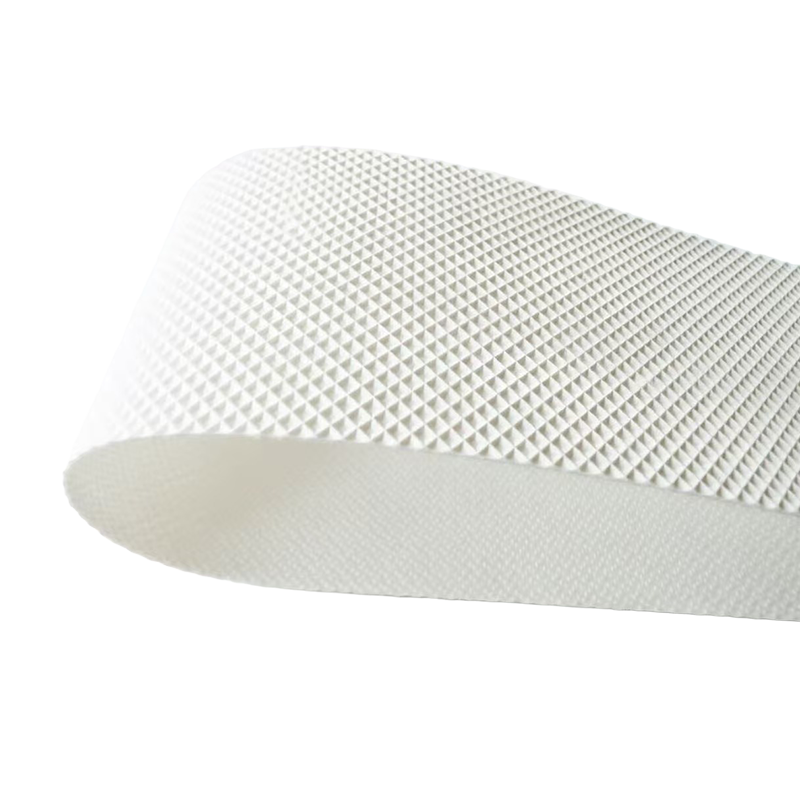 UB-U13/C Blue Diamond-Pattern PU Conveyor Belt
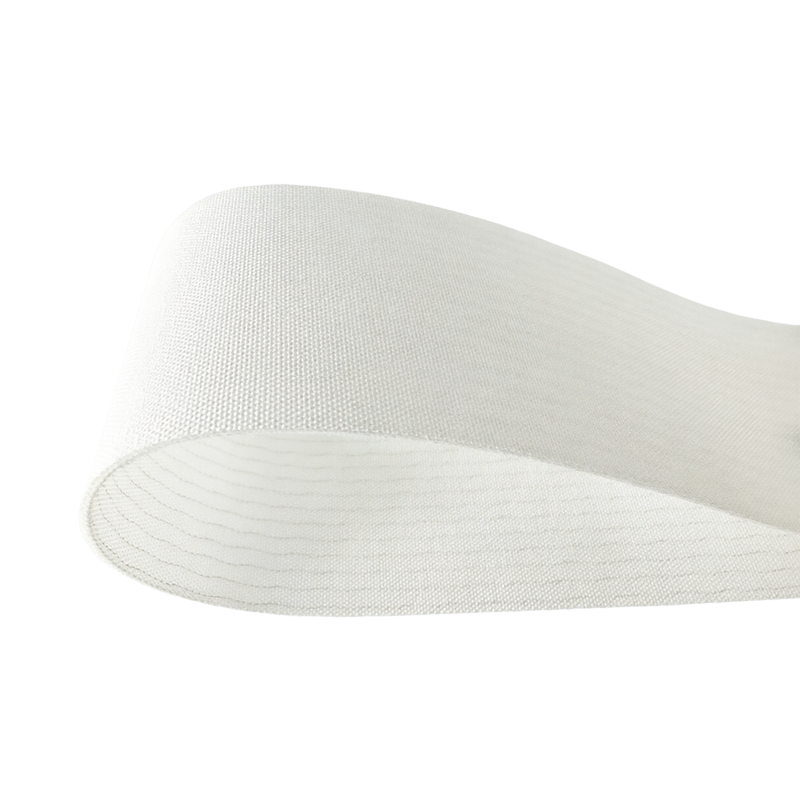 UTB-W115 White Double-Sided Polyester Fabric PU Conveyor Belt
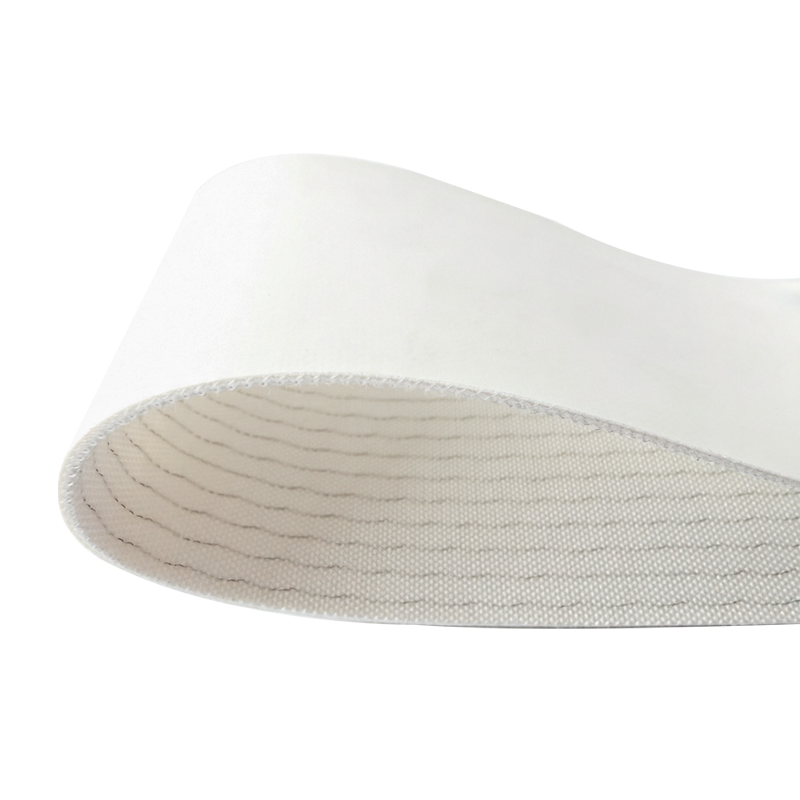 EB-W15 White Matte PE Conveyor Belt
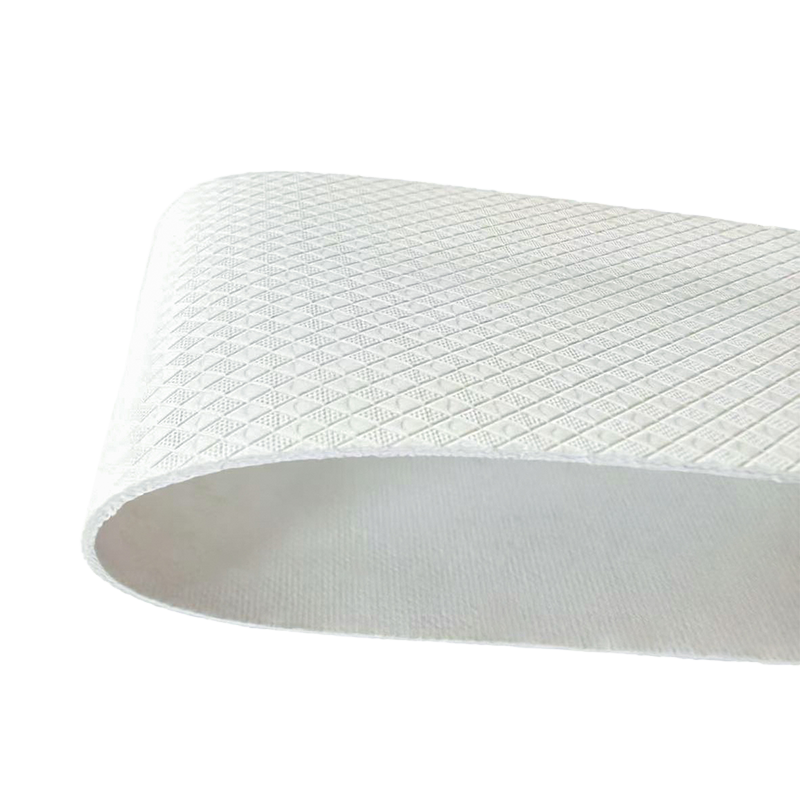 EB-W15/LV Blue Chocolate-Pattern PE Conveyor Belt
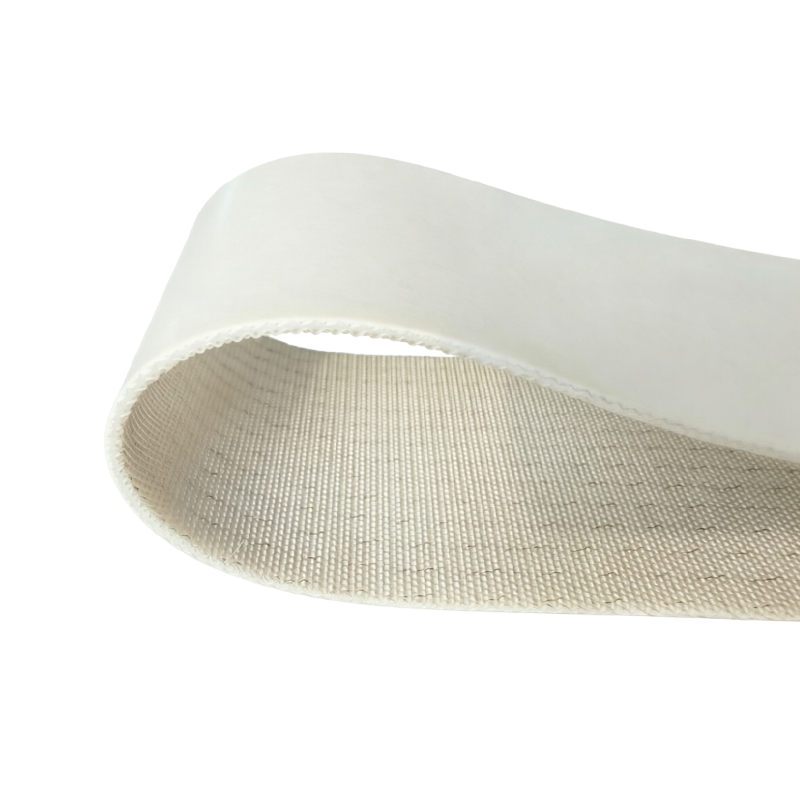 SB-W150 White Silicone Conveyor Belt

+86-513-8633-0688
xinbex-js@xinbex.com
No. 152 Nanhai Road, Sanyu Town, Tongzhou District, Nantong City, Jiangsu Province, P.R.China
Copyright © XINBEX Belting (Jiangsu) Co., Ltd. Rights Reserved. China industrial belting company custom conveyor belt manufacturers
