en
 English
 русский
 Español
 عربى
PU Conveyor Belt Provider
Home / Products / Flat Conveyor Belt / PU Conveyor Belt

Home / Products / Flat Conveyor Belt / PU Conveyor Belt
What a Flat Transmission Belt Does and When It Is the Right Choice A flat transmission belt is the best choice when you need smooth, quiet, high-speed power transfer between two shafts that are far apart, using plain pulleys without grooves. It works by friction between the belt surface and the pul...
READ MOREWhat a Flat Conveyor Belt Is and Where It Works Best A flat conveyor belt is a continuous loop of fabric-reinforced or solid material that carries products on a smooth, uninterrupted surface between two or more pulleys. It is the most common belt format for light and medium loads on packaging lines...
READ MOREQuick Answer: How to Choose Industrial Conveyor Belts The right industrial conveyor belts come from matching five factors: the material being carried, the load and belt speed, the operating temperature, the layout of the conveyor, and the cleaning or hygiene rules of the site. Rubber fabric belts ...
READ MORE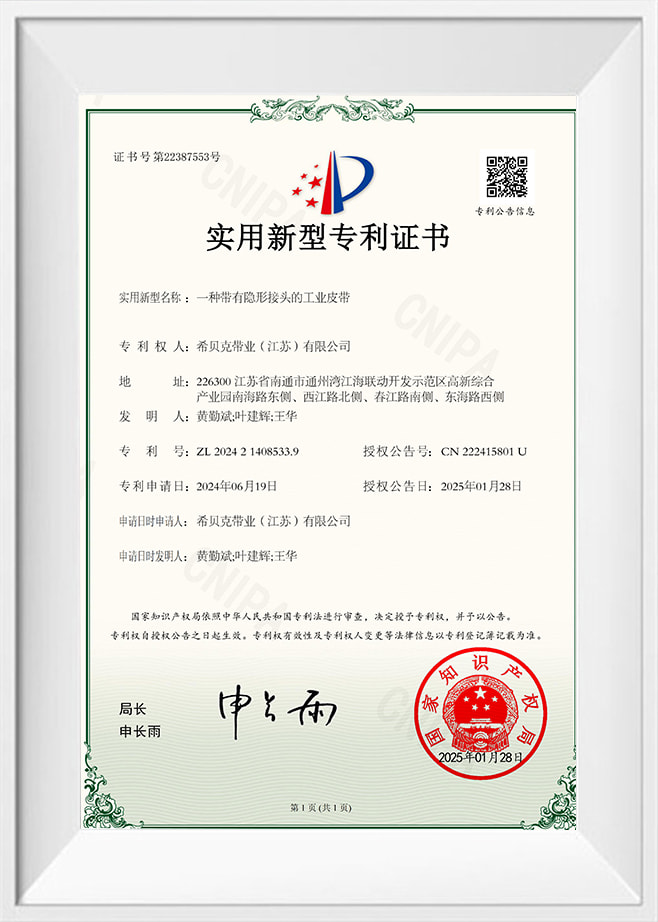
XINBEX Belting (Jiangsu) Co., Ltd. manufactures PU Conveyor Belt Manufacturer solutions from our production bases in Xiamen and Nantong. Since 1998 we have supplied polyurethane flat belts for food processing, logistics sorting, packaging, textile and light-duty automation lines.
Our PU belt range includes blue diamond-pattern and white double-sided polyester fabric constructions, with custom width, surface pattern, splicing and edge preparation available to match your conveyor frame and drive layout.
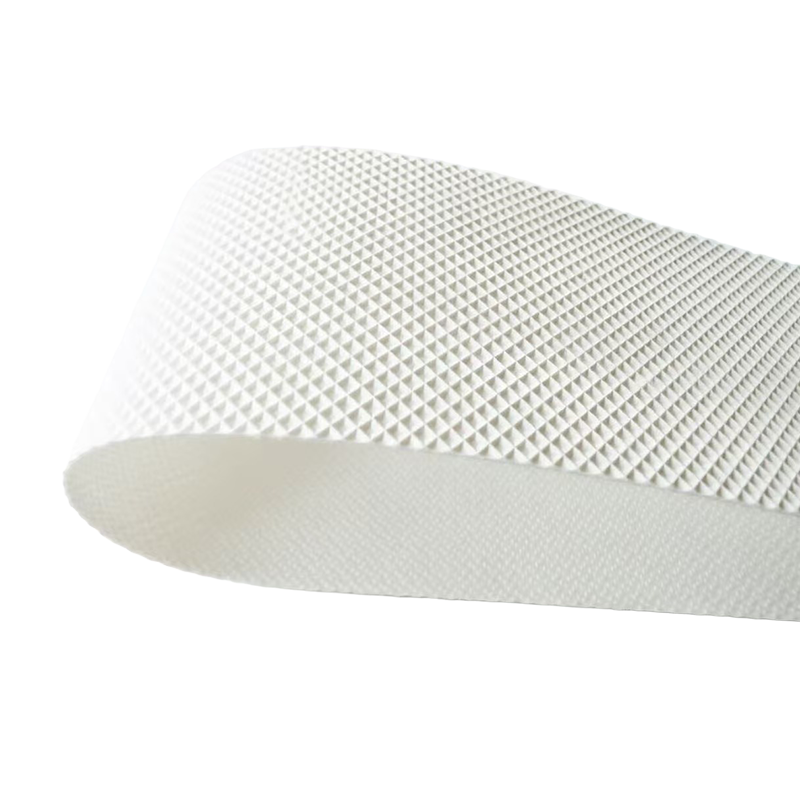
A blue polyurethane flat belt with a diamond top pattern for grip on inclined or accelerating conveyors. The textured surface reduces product slip in sorting, packaging and food handling lines.
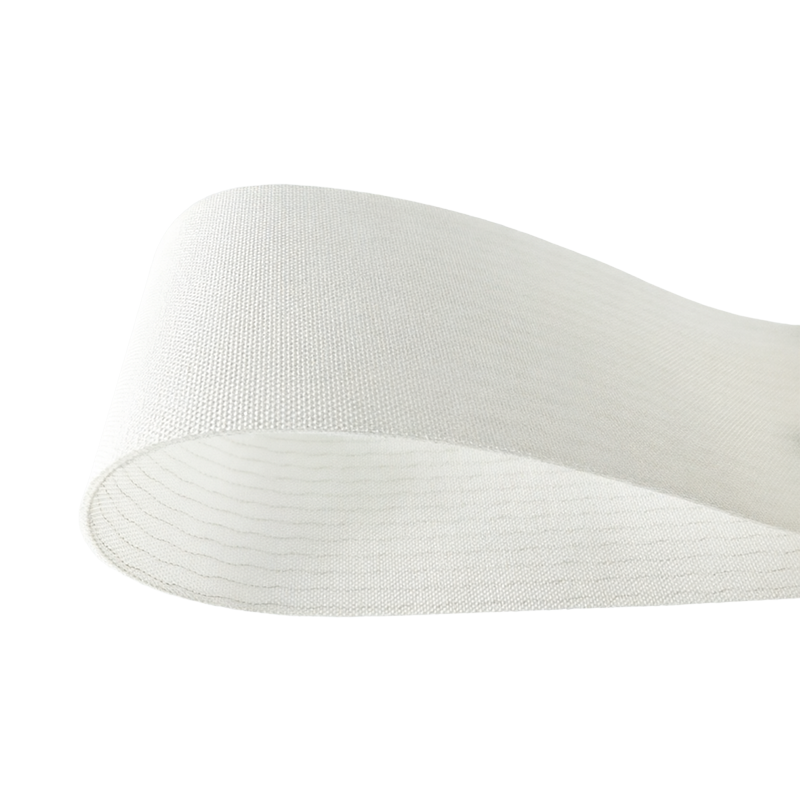
A white PU belt with polyester fabric on both faces, giving balanced friction and dimensional stability on longer runs. Suitable for food contact zones and general material handling where a light-colored belt is preferred.
These two models represent our standard PU flat belt offering. Additional patterns, colors and fabric combinations are configured per order. For other elastomer options, see our PVC Conveyor Belt Manufacturer and Silicone Conveyor Belt Manufacturer ranges.
Our PU belts are selected for lines where cleanliness, low noise and reliable tracking matter. The chart below shows typical industry share of our PU belt shipments, based on order history.
PU Belt Usage by Industry (illustrative)
*Indicative distribution based on internal sales data
For broader material-handling needs, our Flat Conveyor Belt Manufacturer range covers additional grades and thicknesses.
We build each PU belt to the working point of your conveyor. The table below lists the parameters we confirm before production.
| Parameter | Range / Options | Notes |
|---|---|---|
| Thickness | 1.5 – 5.0 mm | Dependent on fabric reinforcement |
| Width | Up to 2000 mm | Custom slit to your frame |
| Surface Pattern | Diamond, smooth, fabric | Pattern affects grip and release |
| Fabric Type | Polyester, polyamide | Balanced for elongation and tracking |
| Color | Blue, white, custom | White preferred for food contact |
| Splicing | Hot vulcanized, mechanical | Endless or open-end delivery |
Additional options such as cleats, sidewalls, perforations and edge sealing are available. Our Flat Transmission Belt Manufacturer range covers power transmission needs.
2.5M
m² annual output
26+
years of belt manufacturing
2
production bases in China
Polyurethane offers high abrasion resistance, low compression set and good resistance to oils and greases. These properties extend belt life in repetitive start-stop cycles and reduce tracking adjustments on high-speed conveyors.
Solid: PU; Dashed: PVC; Dotted line: Rubber (indicative)
Each production lot passes through in-house testing before shipment. Our laboratory performs tensile strength, abrasion resistance, hardness and temperature performance checks, with special tests for chemical resistance and food-contact compliance where required.
We operate under a quality management system certified to ISO 9001. Certificates and test reports are available for project documentation.
We supply PU belts either endless (spliced) or open-end for on-site joining. Our splicing options include hot vulcanization for a smooth, high-strength joint and mechanical fastening for rapid replacement. For food-grade lines, we recommend hot vulcanized endless belts to eliminate crevices.
Our field service team supports alignment, tensioning and tracking adjustment to minimize startup downtime.
Hot vulcanized or mechanical splices prepared to your conveyor frame and belt direction.
We provide spare belts, repair kits and technical guidance to extend service life and reduce unplanned stops.
To prepare an accurate proposal, we ask for the following project details. The more specific the data, the closer the belt will match your line on first installation.
Conveyor Layout
Pulley center distance, belt width, incline angle, drive type and take-up arrangement.
Product to Convey
Item weight, shape, temperature, chemical exposure and whether food contact is involved.
Performance Targets
Belt speed, throughput, ambient temperature range and cleaning method (washdown, dry).
Regulatory Requirements
Any food-safety or chemical-resistance standards the belt must meet.
Share these details with our engineering team and we will recommend the appropriate pattern, fabric and splice for your application. For a full overview of our capabilities, visit our PU Conveyor Belt Manufacturer page.
PU belts offer higher abrasion resistance, better oil resistance and lower compression set than PVC. They are preferred for food contact, oily parts and high-speed sorting. PVC belts are generally more economical for light-duty, general conveying.
Yes. Our white PU belts are formulated for food-contact applications and can be supplied with FDA-compliant materials. We also provide documentation for hygiene audits.
We routinely produce PU belts up to 2000 mm wide. Wider belts can be reviewed on a project basis depending on fabric availability and handling equipment.
Yes. In addition to our standard diamond and smooth finishes, we can produce custom patterns for grip, release or aesthetic requirements, subject to minimum order quantities.
Belts are wound on cores, wrapped in protective film and packed in wooden crates or cartons. Endless belts are coiled with a splice protector. We can include installation instructions and certificates in the shipment.

+86-513-8633-0688
xinbex-js@xinbex.com
No. 152 Nanhai Road, Sanyu Town, Tongzhou District, Nantong City, Jiangsu Province, P.R.China
Copyright © XINBEX Belting (Jiangsu) Co., Ltd. Rights Reserved. OEM pu flat belt manufacturer Wholesale Pu Flat Belt Factory