

 en
 English
 русский
 Español
 عربى
Flat Transmission Belt Guide: Types, Materials and Selection
Home / News / Industry News / Flat Transmission Belt Guide: Types, Materials and Selection


Home / News / Industry News / Flat Transmission Belt Guide: Types, Materials and Selection
2026-11-18
Content
A flat transmission belt is the best choice when you need smooth, quiet, high-speed power transfer between two shafts that are far apart, using plain pulleys without grooves. It works by friction between the belt surface and the pulley face, so it needs less preload than a V belt, puts less load on bearings, and wastes less energy bending and wedging in a groove.
One industry overview of flat belt drives puts transmission efficiency as high as 98 percent (DirectIndustry flat belt overview), which is one of the reasons the design is still specified in textile machinery, machine tools, packaging lines and light conveyors. The trade-off is that a flat belt relies on friction alone, so it suits light to medium loads better than very heavy, shock-loaded drives.
The rest of this guide covers how the belt works, the main constructions, how it compares with other belt types, how to choose the right one, and how to install and maintain it.
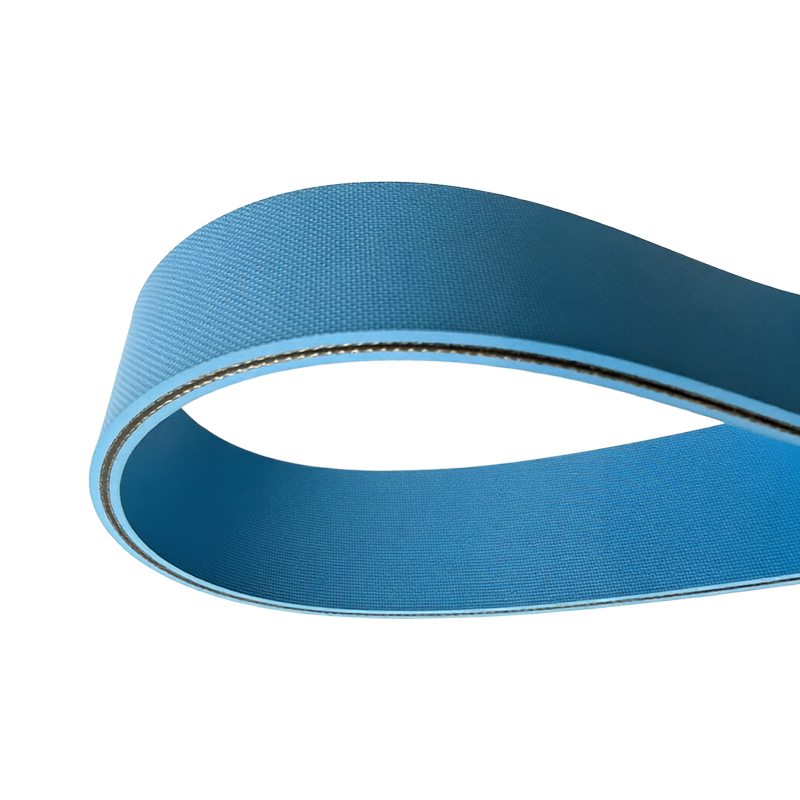 Flat Transmission Belt High-speed flat belts for machine tools, textile machinery and light industrial drives, supplied in custom widths and lengths.
A basic flat belt drive has three parts: a driving pulley, a driven pulley and the belt that connects them. Tension presses the belt against both pulley faces. Friction at the contact surface carries torque from the driver to the driven shaft. Flat belts are described in engineering references as well suited to smaller pulleys and long center distances (GlobalSpec flat belts information).
Because the belt has a large flat contact area and no wedge action, only a modest preload is needed to create the required friction. Technical explanations from tec-science point out that this also reduces the load on the bearings. Lower bearing load means longer bearing life and less heat on the shaft.
A flat belt has no guide groove, so it is kept in place by pulley geometry. A slightly crowned pulley face makes the belt climb toward the high point and settle in the middle, provided the shafts are aligned. The DirectIndustry overview notes that once a drive is aligned, curved pulleys can self-center a flat belt.
Flat belts have a long history in factories, and the capacity of a wide belt on large pulleys can be very high. A commonly cited reference figure is 373 kW at 51 m/s for a wide belt on large pulleys (Wikipedia, belt mechanical article). Modern fabric and polyamide constructions allow a much smaller package for ordinary machine drives.
The power carried by a drive follows a simple relationship: power in kilowatts equals torque in newton-meters multiplied by rpm and 2 pi, divided by 60,000. If the belt type, width or initial elongation changes, the drive must be recalculated.
The name covers several constructions. Choosing between them is the first and most important decision. The table below compares the four types buyers ask about most often.
| Type | Construction | Best suited for | Main limit |
|---|---|---|---|
| Rubber canvas flat belt | Several cotton canvas plies bonded with rubber | General industrial and agricultural drives | Lower speed ceiling than polyamide |
| Nylon sheet base belt | Polyamide sheet core with rubber or leather cover | High-speed, high-load machine drives | Needs clean, aligned pulleys |
| Polyurethane flat belt | PU body with a tension member | Lifting, small pulleys, frequent bending | Heat and oil exposure must be checked |
| Woven endless belt | Woven fabric formed into a continuous loop | Instruments, paper and film transport | Light and medium duty only |
Rubber flat belts are split by how the edge is finished. A cut edge belt is built from full-width canvas plies bonded together, with the cut sides coated in rubber paste. A fold edge belt wraps the outer ply or plies around the sides, which gives curved edges. Supplier catalogs also list fabric weights of 28 oz, 32 oz and 36 oz for the canvas (Made-in-China product listing).
A nylon sheet base belt uses a polyamide sheet as the tension layer and covers the surface with rubber, leather or fiber cloth. Some manufacturers describe a three-layer structure of rubber, polyamide and rubber, with thickness ranging from about 3 mm to 12 mm for pasting and folding machinery (Annilte product pages). These belts are known for low stretch and stable running at high speed.
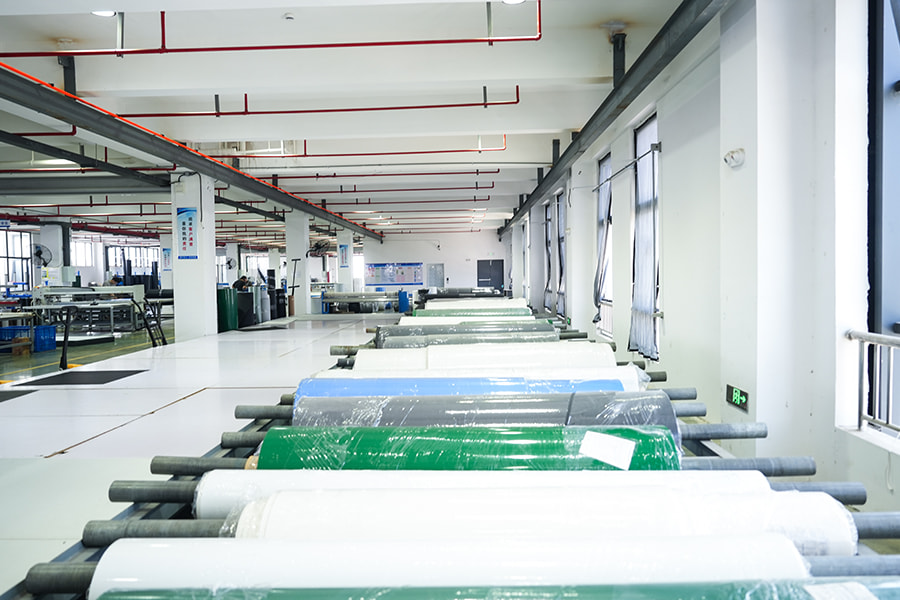 Nylon Sheet Base Belt Low-stretch polyamide core belts for high-speed transmission, available with rubber or leather covers.
Two parts of the belt do different jobs. The tension member carries the load and controls stretch. The cover creates friction against the pulley and protects the core. Reference material lists the common tension member families as polyester, aramid and polyamide (GlobalSpec).
Chloroprene rubber is a frequent choice for covers because it resists heat, oil and wear. Manufacturers of flat rubber belts describe widths from 20 mm to 1,000 mm with two or more plies in brown, beige or black (Ametric flat endless belt data). Leather covers give a high friction coefficient and a long tradition in machine tools. Polyurethane covers suit small pulleys and frequent bending, which is why they appear in lifting systems and fitness equipment (Roth flat belts).
A smooth cover runs quietly and gives the longest pulley life. A textured cover adds grip for conveying and higher torque. If a drive slips even at correct tension, a cover with a higher friction coefficient is often a simpler fix than a wider belt.
No belt type wins in every case. A flat belt gives the best efficiency and the quietest running. A V belt gives higher torque in a compact space. A timing belt gives exact speed ratio with no slip. The table shows where each one fits.
| Feature | Flat belt | V belt | Timing belt |
|---|---|---|---|
| Power transfer | Friction | Friction in groove | Positive tooth drive |
| Pulley type | Plain, crowned | Grooved | Toothed |
| Efficiency | Highest | Lower, wedging losses | High |
| Slip | Some creep | Some creep | None |
| Center distance | Long distances work well | Short to medium | Short to medium |
| Noise | Low | Moderate | Can hum at high speed |
If your machine needs an exact speed ratio, use a timing belt. If it needs maximum torque in the smallest space, use a V belt. If it needs quiet, efficient, high-speed motion over a long span, a flat transmission belt is the stronger option.
Engineering references list conveyors, compressors and machine tools among the typical uses of flat belts (GlobalSpec; Eaton datasheet summary). In practice the belt appears in many more places.
Ring spinning, rotor spinning, twisting and looms use tangential belts and spindle belts, which are high-speed polyamide-core flat belts. These drives run many spindles from one long belt, which suits the flat belt's tolerance for long spans.
Lathes, drilling machines and grinders use flat belts to isolate the motor from vibration and to give smooth surface finishes. Stepped cone pulleys with flat belts are still found on drilling machines and lathes (Heavy Equipment Magazine belt overview).
Folder gluers, pasting machines and feeders use rubber-covered flat belts to grip and move cartons and sheets without marking them. Woven endless belts handle currency, checks, film and paper in sensitive transport positions.
Grain handling, feed processing, mixers, pumps and presses all use flat belts. The wider industrial belt drive market is forecast to reach about USD 10.1 billion by 2035, with automation and agriculture named as growth drivers (Heavy Equipment Magazine).
Polyurethane flat belts handle the smallest bending radii and frequent direction changes, so they appear in elevator systems, lifting mechanisms and fitness machines.
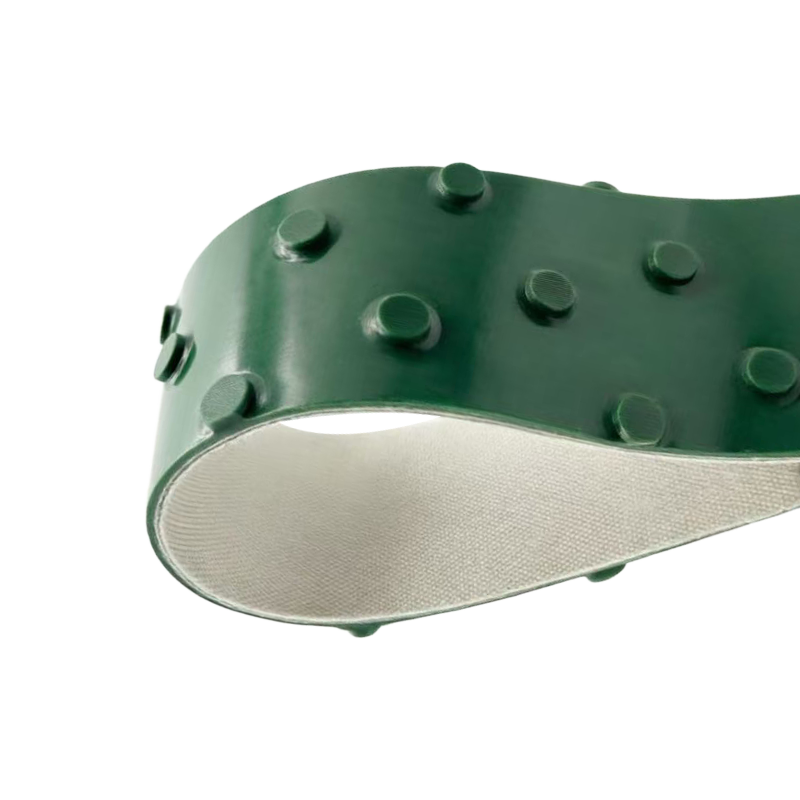 Rubber Flat Belt Canvas-reinforced rubber flat belts for packaging machines, feeders and general industrial drives.
Most early belt failures trace back to a wrong specification, not a bad belt. Work through these steps in order.
A drive transmits 10 N-m at 1,500 rpm. Power is 10 x 1,500 x 6.283 / 60,000, which is about 1.57 kW. If the motor can start under load, apply a service factor to that figure before choosing the belt width. Your supplier's rating table then tells you which width and construction carry that load at your belt speed.
A good belt on a poor pulley still fails early. Pulley condition and alignment account for a large share of flat belt problems.
Every belt has a minimum pulley diameter tied to its thickness and construction. Running below that diameter causes fatigue in the core and cover cracking. Polyurethane belts tolerate the smallest diameters, while thick canvas belts need larger ones. Always follow the minimum diameter in the supplier's data.
A gentle crown on one or both pulleys keeps the belt centered. The pulley surface should be clean, free of rust, and smooth enough to avoid scuffing the cover. Oil or grease on the face lowers friction and causes slip.
Shafts must be parallel and pulleys must sit in the same plane. A straight edge or a taut string across both pulley faces shows misalignment quickly. A tracking belt that always drifts to one side points to a parallelism error, not a belt defect.
Too little tension causes slip, heat and glazed surfaces. Too much tension overloads bearings and shortens belt life. Low-stretch polyamide belts are usually installed with a small, specified elongation, and the supplier will provide that value. Re-check tension after the first hours of running, because new belts settle.
A flat belt can be supplied as a continuous loop or cut to length and joined. Each choice has a clear use.
For high-speed drives, choose seamless or a well-made bonded splice. Save mechanical lacing for slow, rugged drives where downtime matters more than smoothness.
A flat belt asks for very little attention, which is part of its appeal. A short routine inspection catches most problems early. Look at the belt edges, the cover surface, the pulley faces and the tracking position at each planned stop.
| Symptom | Likely cause | Correction |
|---|---|---|
| Belt runs off to one side | Shafts not parallel | Realign pulleys and check crown |
| Slip and squeal | Low tension or oily pulley | Clean the pulley and restore tension |
| Glazed, shiny cover | Chronic slip and heat | Fix tension, consider a higher-friction cover |
| Cracks on the outer surface | Pulley too small or heat exposure | Use a larger pulley or a heat-rated cover |
| Frayed edges | Contact with a guard or flange | Correct tracking and clearances |
| Vibration or flutter | Uneven joint or loose tension | Replace the joint or retension the belt |
Wipe the belt with a dry or lightly damp cloth. Avoid solvents unless the supplier approves them for the cover. Store spare belts loosely rolled or hung on a wide support, away from direct sunlight, heat sources and ozone-producing equipment. Never store a belt folded or under heavy weight.
Replace the belt when the cover is cracked through to the core, the edges are badly frayed, the belt has stretched beyond the take-up range, or slip cannot be cured by tension adjustment. Keeping one spare belt of the correct size on site limits downtime.
The cheapest belt per meter is rarely the cheapest over a year of running. Total cost depends on a handful of factors.
When you request a quotation, give the supplier your power, rpm, pulley sizes, center distance, environment and expected hours per day. That information lets the supplier propose a belt that matches the real duty rather than a generic size.
Market research reports on power transmission flat belts name manufacturers such as ContiTech, Bando, Habasit and Esbelt among the major players, and track demand by type and by region including China, India, Europe and Southeast Asia (MarketPublishers report listing). Industry commentary points to automation, agriculture and sustainability as the main demand drivers for belt drives in general (Heavy Equipment Magazine).
For buyers, the practical trends are clear. Low-stretch polyamide and polyurethane constructions keep gaining share. Anti-static covers are asked for more often in textile and packaging machinery. Customized widths and lengths are standard rather than special requests, and many factories now quote made-to-order endless belts for short production runs.
A flat belt is a made-to-fit part. The more detail you give, the closer the first sample will be to the final belt. Prepare these items before you ask for a quote.
Our factory builds belts to these inputs and can propose alternatives when a requested size would run near its limits. You can browse related belt families below.
It transfers rotation from a motor pulley to a driven pulley using friction. Typical uses are machine tools, textile machinery, packaging equipment, compressors, agricultural machines and light conveyors.
It depends on the drive. A flat belt is more efficient, quieter and better over long spans. A V belt carries more torque in a compact drive because the groove adds wedging grip.
Speed depends on construction. Rubber canvas belts suit moderate speeds, while polyamide-core belts are built for high-speed drives. A reference figure often cited for a wide belt on large pulleys is 373 kW at 51 m/s. Use your supplier's speed rating for the specific belt.
It is a flat belt with a polyamide sheet as the tension layer and a rubber, leather or fabric cover on the surface. It offers low stretch and high strength, which makes it a common choice for high-speed machinery.
No. They run on plain pulleys, often with a slight crown to keep the belt centered.
The usual causes are low tension, oil or dust on the pulley, an undersized belt width, or a wrap angle that is too small. Clean the pulley, check tension, and confirm the width against the load.
Yes. Flat belts are normally cut or built to the width and length of the application, and endless or spliced versions can both be produced. Rubber flat belt data from suppliers lists widths from 20 mm up to 1,000 mm.
Wrap a flexible tape around both pulleys along the belt path, or calculate the length from pulley diameters and center distance. Then confirm the figure with your supplier and allow for the take-up range.
Service life varies with load, speed, temperature and alignment. A well-matched belt on clean, aligned pulleys at correct tension can run for a long period with little attention, while a misaligned or overheated drive may fail in weeks.
In most cases, yes. Leather was one of the original flat belt materials, and nylon and other tough synthetics are now common because they last longer. Match the thickness and friction level, and check the minimum pulley diameter.
Related Products
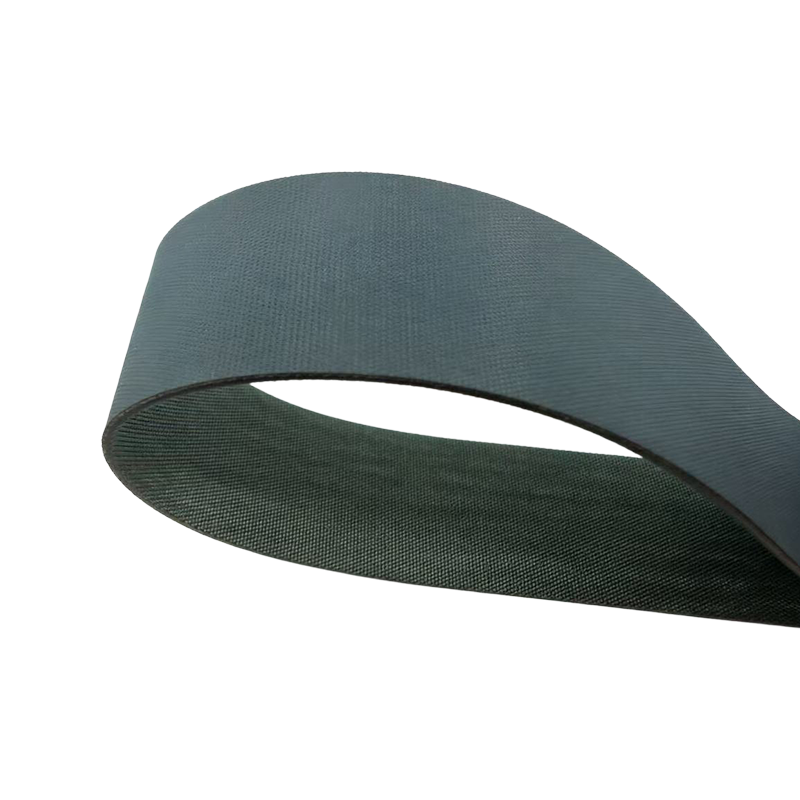 RF-18 NBR Rubber/Polyester Fabric Power Transmission Belt
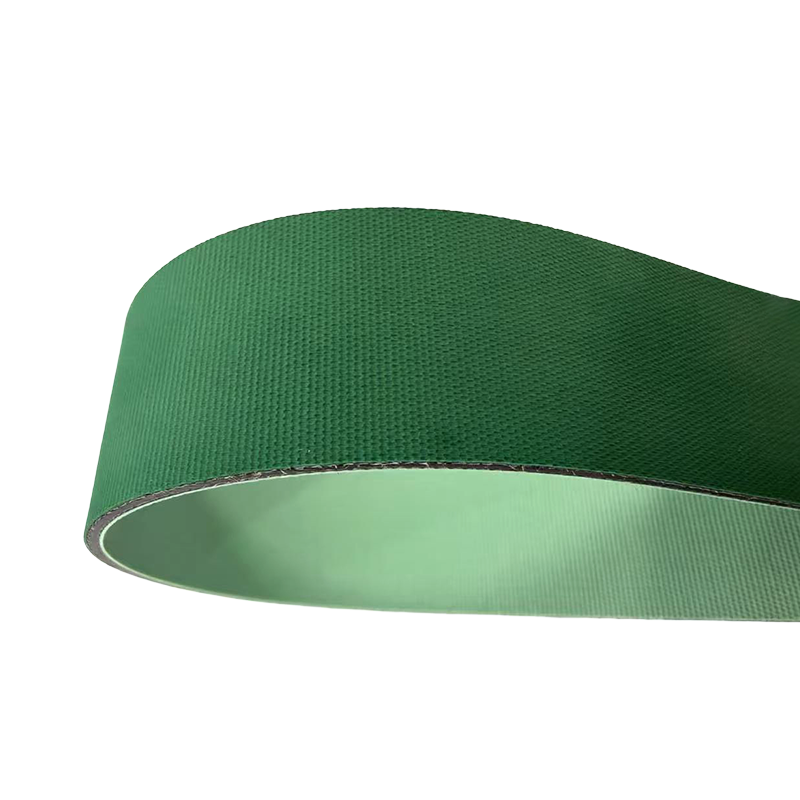 SF20 Antistatic, Wear-Resistant Rubber-Based Power Transmission Belt
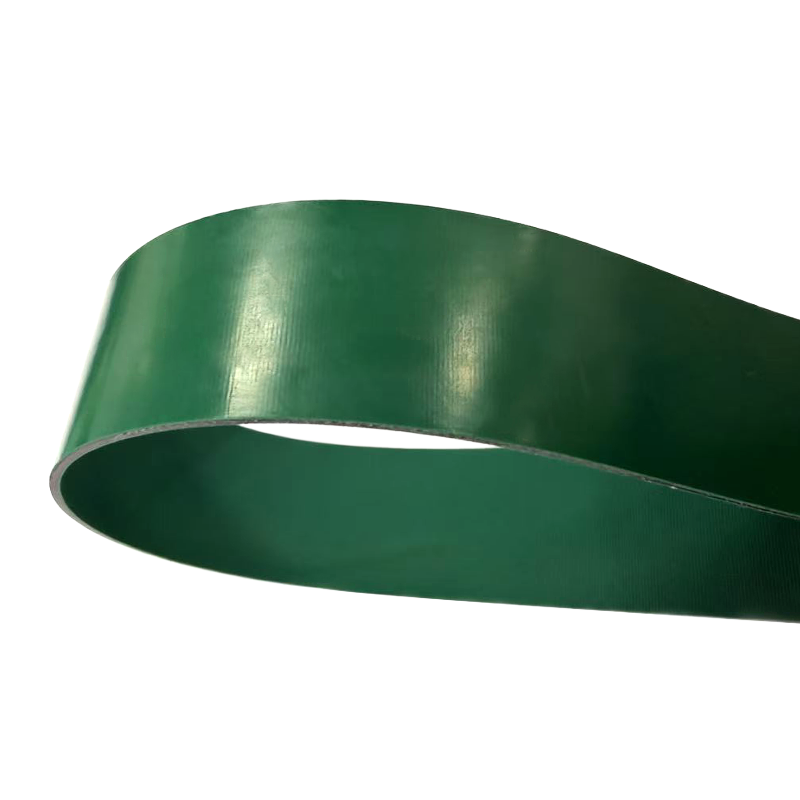 P-1 Matte-Finish, Highly Wear-Resistant Power Transmission Belt
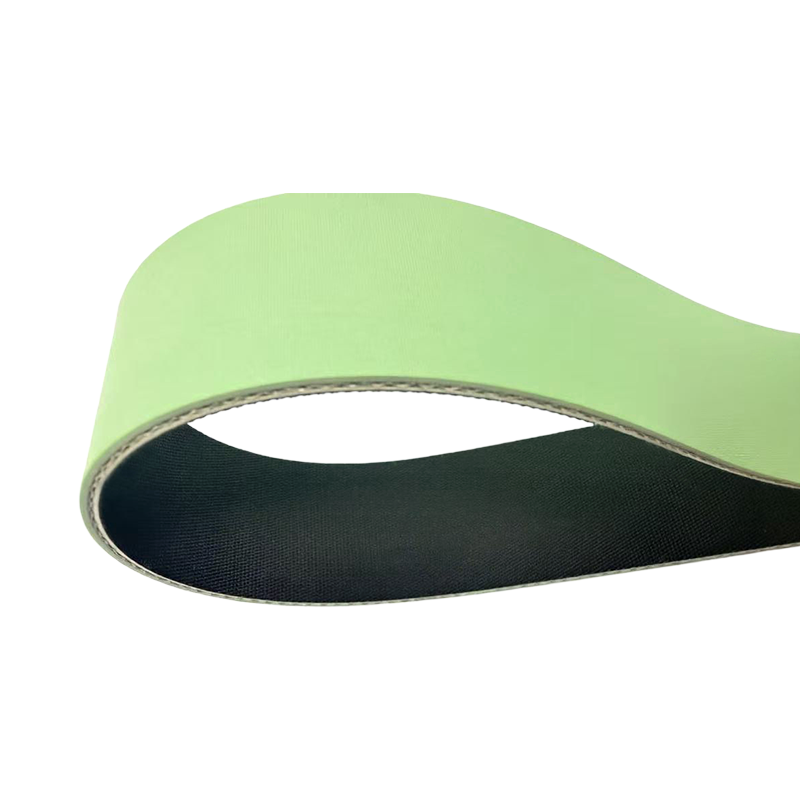 TC-20/25 Green-Black Antistatic Polyester Power Transmission Belt
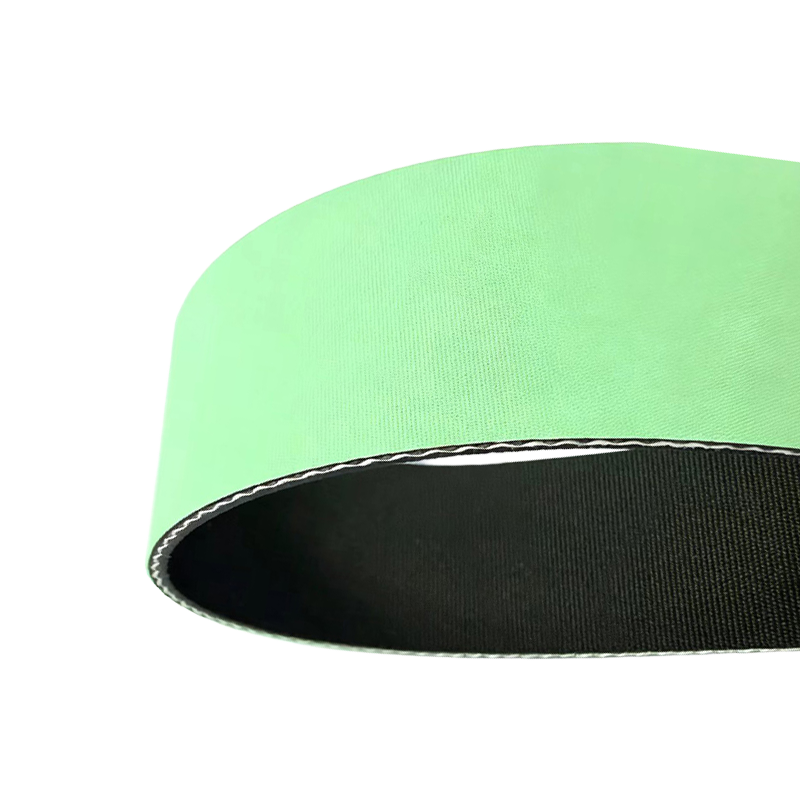 TC-20 Green-Black Antistatic Polyester Transmission Belt
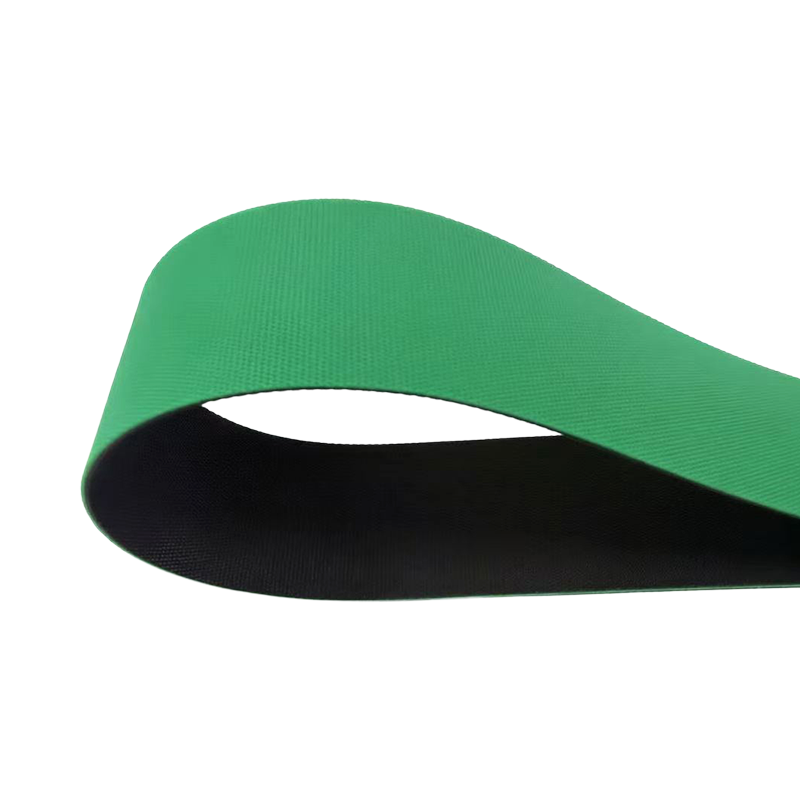 MAB-02 Green-Black Elastic Belts with Fabric-Texture Finish

+86-513-8633-0688
xinbex-js@xinbex.com
No. 152 Nanhai Road, Sanyu Town, Tongzhou District, Nantong City, Jiangsu Province, P.R.China
Copyright © XINBEX Belting (Jiangsu) Co., Ltd. Rights Reserved. China industrial belting company custom conveyor belt manufacturers
